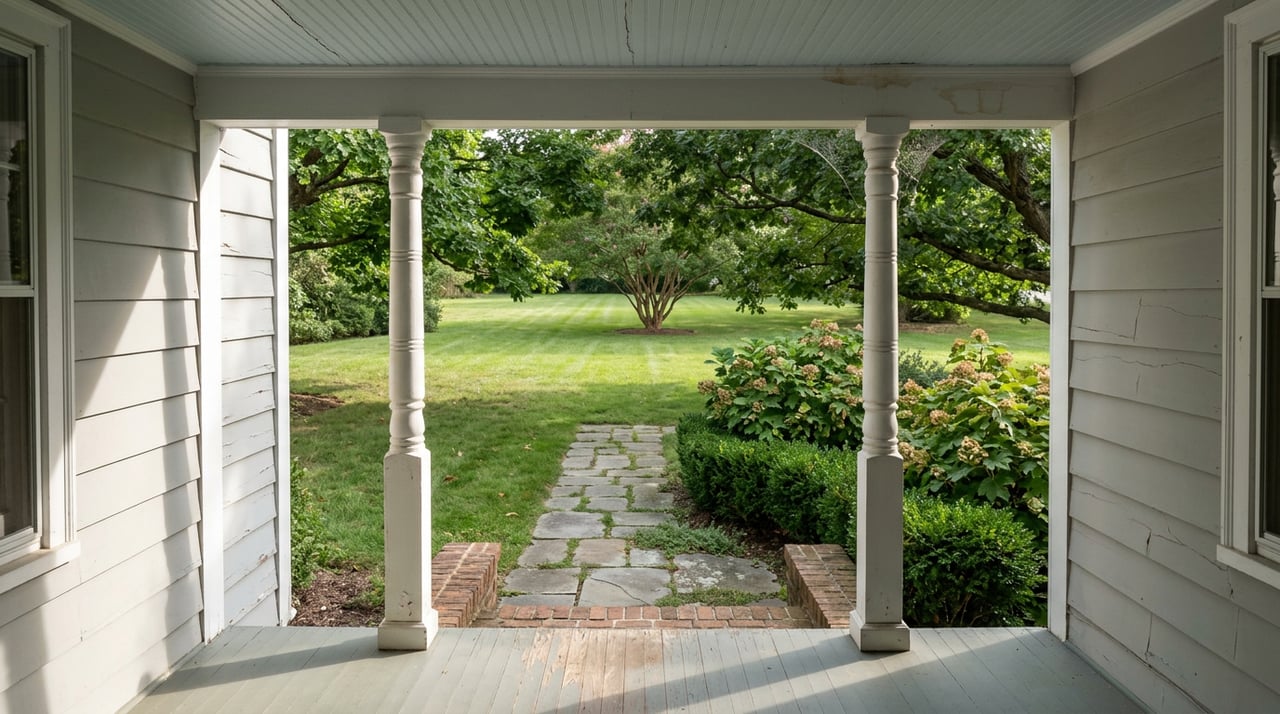
Hillsborough's Historic District vs. Collins Ridge: What the Price Per Square Foot Actually Buys You
September 24, 2026
September 24, 2026
Ask someone touring both sides of Hillsborough which one costs more per square foot, the 1920s cottage three blocks off Churton Street or the brand-new townhome at Collins Ridge, and most people guess wrong. The instinct says character costs extra. The math says the opposite, and the reason has almost nothing to do with charm.
It has to do with a calendar.
Hillsborough's housing stock splits into two distinct products, and they sit less than a mile apart. Inside the Historic District, established through a 1973 preservation ordinance and listed on the National Register of Historic Places, you'll find more than 100 houses, churches, and buildings dating to the 18th and 19th centuries, ranging from 875-square-foot cottages to estates topping 5,000 square feet. Walk out the front door and you're close to Churton Street, the Riverwalk along the Eno River, and Weaver Street Market.
A short drive away, the town's newer growth tells a different story. Collins Ridge, a D.R. Horton master-planned community half a mile from downtown, is approved for 950 dwellings across houses, townhomes, and apartments, plus 88 affordable rental units built by CASA. Churton Grove, built by Beazer and Drees since 2001 on 330 wooded acres, offers larger transitional-style homes from roughly 2,300 to 5,250 square feet. Waterstone and Forest Ridge round out the newer tier. None of these sit inside the Historic District boundary, which turns out to be the whole point.
Buy a house inside the Historic District and decide you want to replace a window, add a screened porch, or take down a dying tree that's visible from the street, and you don't just call a contractor. You need approval from the town's Historic District Commission, which reviews exterior changes under a Certificate of Appropriateness process.
The commission doesn't meet on demand. It meets once a month, the first Wednesday, at 6:30 p.m. in the Town Hall Annex. To get on that agenda, the process runs on a fixed schedule:
Add it up and a straightforward exterior project runs seven to nine weeks from first conversation to approval, assuming nothing gets sent back for changes. Not every project needs this. Ordinary maintenance and interior work don't require a Certificate of Appropriateness, and some minor exterior items, like swapping vinyl windows for wood, can be approved by staff without a full hearing. But anything visible from the street that changes the building's appearance goes through the commission's calendar, not yours.
None of this exists to make homeownership harder. It exists to keep Churton Street looking like Churton Street, which is exactly what draws people there in the first place. But it's a real cost, paid in time rather than dollars, and it doesn't show up on a closing statement.
Step outside the district boundary and that calendar disappears. Homes in Collins Ridge, Waterstone, and Forest Ridge were built under standard modern building code, with no historic-district review for paint, windows, additions, or decks.
Here's where the price-per-square-foot numbers get interesting. As of August 2026, Hillsborough's town-wide average sale price sat at $262.55 per square foot, with the median sale price at $490,000, up 3.2 percent from a year earlier. Homes were taking an average of 44 days to sell that month, compared to 35 days the year before, a small but real cooling.
Now compare that blended average to what new construction actually costs to build into. Collins Ridge Townes priced two of its plans this past July at $389,990 for the 2,439-square-foot Linville and $379,990 for the 2,240-square-foot Savannah, working out to roughly $160 and $170 per square foot. A single-family Sierra plan in the same community listed earlier this year at $418,990 for 2,395 square feet, about $175 a square foot.
| Product | Square Footage | Starting Price | Price per Sq Ft |
|---|---|---|---|
| Hillsborough town-wide average (Aug. 2026) | blended | blended | $262.55 |
| Collins Ridge Townes, Linville plan (Jul. 2026) | 2,439 | $389,990 | ~$160 |
| Collins Ridge Townes, Savannah plan (Jul. 2026) | 2,240 | $379,990 | ~$170 |
| Collins Ridge single-family, Sierra plan | 2,395 | $418,990 | ~$175 |
That's an $85 to $100 per square foot gap between a repeatable, production-built floor plan and the town's overall blended average. It's not that new construction is cheap. It's that a builder running the same handful of plans across hundreds of lots achieves a cost efficiency that a market full of one-of-a-kind cottages and custom additions simply can't match. Historic homes carry unique lot shapes, unique systems, and unique renovation histories, and none of that averages down the way a repeated floor plan does.
So the assumption that new construction commands a premium doesn't hold up here. In Hillsborough, the premium runs the other way. What you're actually paying for in the Historic District isn't more expensive square footage. It's a house you can't unilaterally change, on a schedule set by a monthly meeting instead of your own timeline.
If you're comparing a historic cottage to a Collins Ridge townhome this fall, the honest question isn't which one costs more. It's which cost you'd rather carry.
A family planning to update a kitchen or add a porch over several years, with no hard deadline, can build the Certificate of Appropriateness calendar into a normal renovation timeline and never feel it. Someone relocating for a job start date, or a downsizing buyer who wants single-level living without a maintenance list, is often better served by a home where exterior changes don't require a hearing at all.
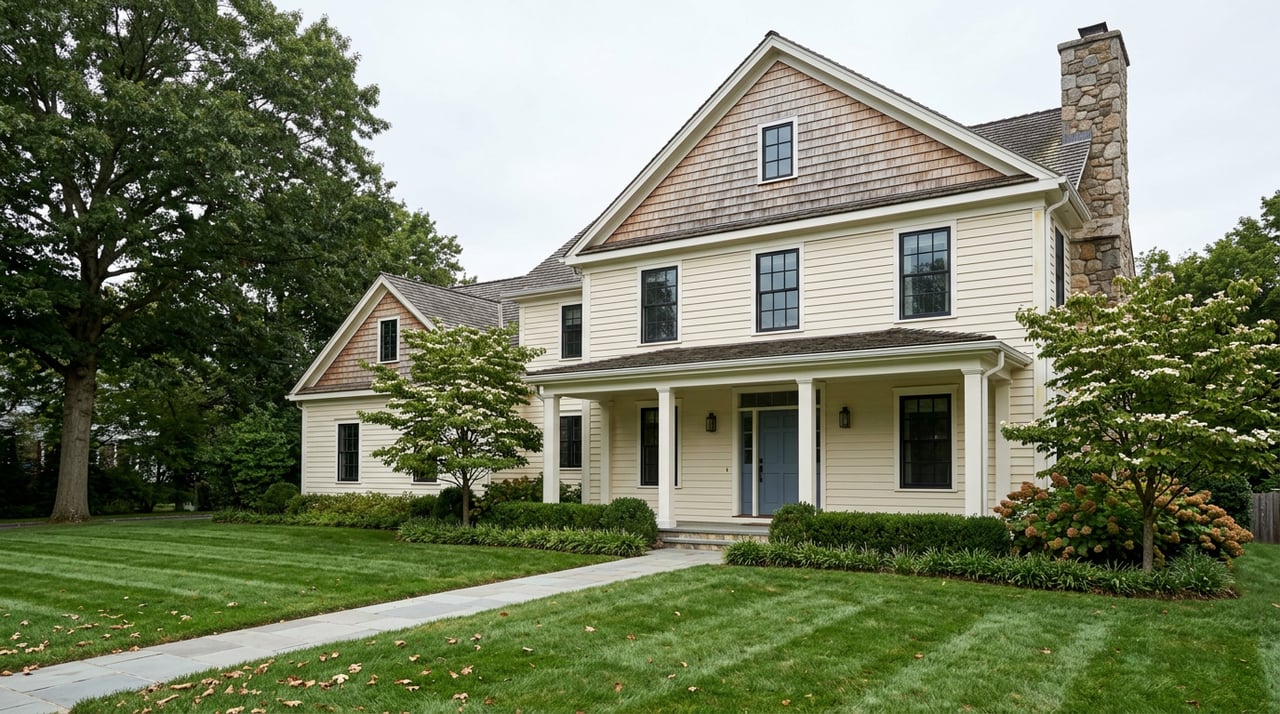
Churton Grove sits in between. Built since 2001 outside the district boundary, its larger transitional homes offer more established landscaping and square footage than brand-new Collins Ridge, without the monthly-meeting requirement that comes with the Historic District address.
None of these are better or worse choices. They're different trades, and knowing which one you're making before you write an offer is worth more than knowing the median price.
Does every exterior project need a Certificate of Appropriateness? No. Ordinary maintenance, interior work, and some minor exterior items can be approved administratively by town staff without a full commission hearing. The dividing line is whether the change is visible from the street and alters the building's historic appearance.
Can I still get a historic tax credit if I buy in the district? Not automatically. Local historic-district status is separate from the qualifications required for the state's homeowner rehabilitation tax credit, so it's worth confirming a property's specific status before building any credit into your renovation budget.
Does the Certificate of Appropriateness process apply to a new deck or fence? It depends on visibility and scope. Preservation North Carolina, the statewide nonprofit that supports local historic commissions, notes that a Certificate of Appropriateness covers exterior changes but that routine maintenance and interior work are exempt. When in doubt, a pre-application conversation with town staff before you buy, not after, is the cheapest way to find out.
If you're weighing a historic Hillsborough address against something newer and want to see actual listings on both sides of that line, Pat Dillon Real Estate can walk through the trade-offs specific to the house you're considering. Schedule a free 30-minute consultation and bring your questions about timelines, not just price.

Schedule your free 30 minute consultation with Pat to learn more about the buying and selling process and how to get started!

PAT DILLON REAL ESTATE
(919) 368-4068
[email protected]
704 Slash Pine Dr
Cary NC 27519
308 W Main St Ste A
Durham NC 27701
Hours
8 AM - 6 PM