Old House, No Rules: The Historic District Line Durham Buyers Keep Missing
August 13, 2026
August 13, 2026
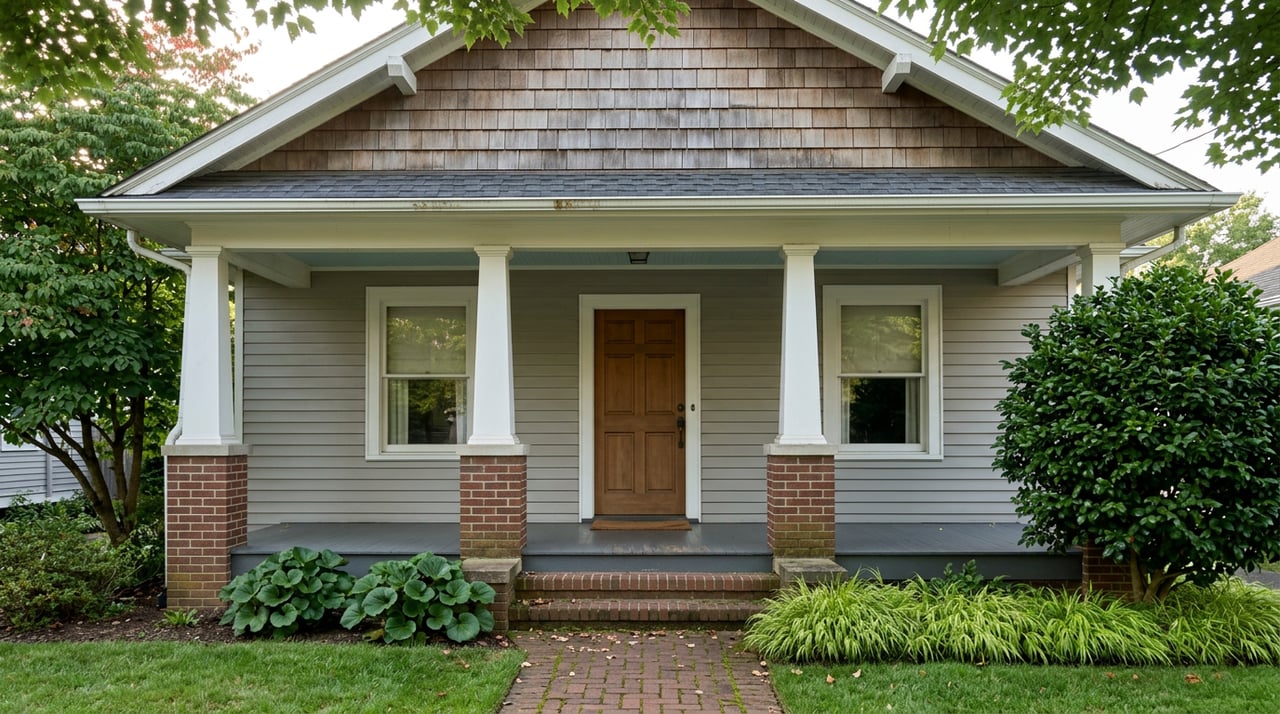
Say you spend a Saturday touring two early-1900s houses in Durham. One sits on a tree-lined street in Trinity Park, wide porch, original windows, a century of oak canopy overhead. The other is a few miles away in Watts-Hillandale, same style of bungalow, same era of craftsmanship. Most buyers walk out of both assuming they just toured two historic properties with the same rulebook attached. They didn't. One of those houses can have its windows swapped, its siding replaced, or a rear addition framed without a single hearing. The other cannot touch its exterior without approval from Durham's Historic Preservation Commission first.
That gap is not about age, curb appeal, or how the house photographs. It is about a line on a zoning map, and it is the single most misunderstood fact among buyers shopping Durham's older, in-town neighborhoods.
Durham currently has eight neighborhoods with local historic district status: Trinity Heights, Watts-Hillandale, Morehead Hill, Holloway Street, Golden Belt, Fayetteville Street, Downtown Durham, and Cleveland Street. If your address falls inside one of those boundaries, any exterior change to the property, visible or not, requires a Certificate of Appropriateness before a building permit can even be pulled.
Trinity Park is not on that list. Neither is Duke Park, the 1920s and 1930s bungalow neighborhood nearby. Both read as textbook historic Durham, foursquares and Craftsman cottages, deep front porches, mature street trees, and neither one has design-review authority attached to its lot lines. An owner in either neighborhood can re-side a house in vinyl, replace six-over-one windows with vinyl replacements, or build a second-story addition, and the city's Historic Preservation Commission has no say in any of it.
Old West Durham took a third path. Rather than full historic district status, it adopted a Neighborhood Protective Overlay, a customized set of rules that offers some protection against out-of-scale development without triggering full Certificate of Appropriateness review on every project. It sits in the middle, more structure than Trinity Park, less process than Watts-Hillandale.
The Trinity Park Neighborhood Association actually debated pursuing full historic designation back in 2020. Preservation Durham representatives came to a neighborhood meeting to walk through the tradeoffs, and the conversation split the way these conversations usually do: some residents wanted the protection against teardowns, others worried about losing control over their own exteriors. The board decided it would not be the body to initiate a petition, and the neighborhood has remained undesignated since.
For owners inside one of the eight districts, the process has real timelines attached. Minor COA applications, the kind covering things like a comparable window replacement or a small deck, are reviewed by city staff on a rolling basis, with comments typically returned within 10 business days. Major COA applications, covering additions, new construction, or anything with broader visual impact, go before the Historic Preservation Commission itself, which meets on the first Tuesday of each month. The application deadline for that hearing is set close to two months in advance, and once granted, a COA stays valid for two years or as long as an active building permit keeps it alive.
None of that is a minor detail if you are buying a Watts-Hillandale house planning to add a primary suite, or a Morehead Hill property where you want to replace failing original windows with something more energy efficient. Budget the review calendar the same way you'd budget the renovation itself.
Here is where the obvious story breaks down. The intuitive assumption is that more regulation means a slower, more hesitant market. Buyers picture a neighborhood with design review as a place where sellers wait longer and get less, because every prospective buyer has to price in the friction of future approvals.
Recent sales data says the opposite. Watts-Hillandale, fully subject to Certificate of Appropriateness review, posted a median sale price of $501,250 with a median of just 30 days on market. Trinity Park, with no design-review requirement at all, closed March 2026 at a lower median of $445,000, sitting a median of 146 days on market, on only five recorded sales that month.
That is not a small gap. The regulated neighborhood moved roughly five times faster and sold for more.
Part of the explanation is volume. Five sales is a thin enough sample that any single closing swings the median hard, which is exactly why Trinity Park's numbers bounce around so much month to month. But volume alone doesn't explain the direction of the gap. A more useful read is that design review functions as a form of certainty. A buyer in Watts-Hillandale knows the streetscape they're paying for is protected from the neighbor tearing down a bungalow for something out of scale. In Trinity Park, that same buyer is taking on the house and the neighborhood's future shape as one bundled risk.
Trinity Park's listing-price data as of August 2026 tells a related story. Current asking-price benchmarks for the neighborhood run well above $700,000, a big jump from March's closed-sale median. That is less a sign of sudden appreciation than a reminder that in a five-sale month, closed-sale medians and current ask-price benchmarks can diverge sharply. Anyone quoting a single neighborhood median as gospel in a low-volume market is telling you less than they think they are.
If design certainty and resale predictability matter more than renovation freedom, the eight designated districts are worth a closer look, Watts-Hillandale, Morehead Hill, and Trinity Heights among them. You give up some flexibility on exterior changes, but you gain a neighborhood where the streetscape you bought into is harder to erode.
If you want maximum control over your own exterior, Trinity Park and Duke Park let you renovate, add on, or update systems without a city hearing standing between you and a permit. That freedom comes with a tradeoff: nothing stops your neighbor from making a very different choice next door.
If you want something in between, Old West Durham's overlay approach offers partial protection without the full Certificate of Appropriateness process attached to every project.
None of these are better or worse choices in the abstract. They're different bets on what you're actually buying, and the difference should show up in your offer strategy and your renovation budget before it shows up in a surprise HPC letter.
Historic district status has nothing to do with what's behind the walls. Pre-1940s bungalows across Trinity Park, Duke Park, Old West Durham, and the Duke-adjacent streets share the same aging systems no zoning designation changes. Local inspectors who specialize in this housing stock focus on porch and addition tie-ins, legacy wiring, attic ventilation, and window and brick water management, the places where a century-old house tends to hide its real condition. Expect knob-and-tube wiring or ungrounded circuits in any home that hasn't had a full electrical upgrade, along with the usual pre-1940s companions: original foundation materials, galvanized or cast iron plumbing runs, and single-pane wood windows with a century of paint layers on the sills.
None of that shows up on the historic district map. It shows up in a good inspection, which matters just as much in an undesignated Trinity Park cottage as it does in a fully protected Watts-Hillandale foursquare.
Does an old house automatically fall under historic district rules in Durham? No. Local historic district status attaches to specific mapped boundaries the city has formally designated, not to a house's age or style. Durham's Durham Maps GIS tool lets you check any address against the current district and landmark layers directly.
Does a Certificate of Appropriateness cover interior renovations? No. COA review applies to exterior changes and site work. Interior renovations, including gut kitchen and bath remodels, do not trigger the process.
Can a Neighborhood Protective Overlay change over time? Overlay boundaries and historic district designations are both established through the same process used to change zoning on a parcel, meaning either can, in theory, be revisited through a future petition. Nothing about a neighborhood's current status is permanent by default.
Whether you're weighing a Trinity Park bungalow against a Watts-Hillandale foursquare, or trying to figure out what a given address actually allows you to do to it, the designation question deserves to be answered before the offer, not after closing. Pat Dillon Real Estate has spent 20-plus years reading Durham's older neighborhoods block by block, including which ones come with a Certificate of Appropriateness attached and which ones don't. Schedule a free 30-minute consultation and we'll walk through exactly what your target neighborhood allows before you write an offer.

Schedule your free 30 minute consultation with Pat to learn more about the buying and selling process and how to get started!

PAT DILLON REAL ESTATE
(919) 368-4068
[email protected]
704 Slash Pine Dr
Cary NC 27519
308 W Main St Ste A
Durham NC 27701
Hours
8 AM - 6 PM