Hope Valley at 100: Reading a House by the Decade It Was Built
November 19, 2026
November 19, 2026
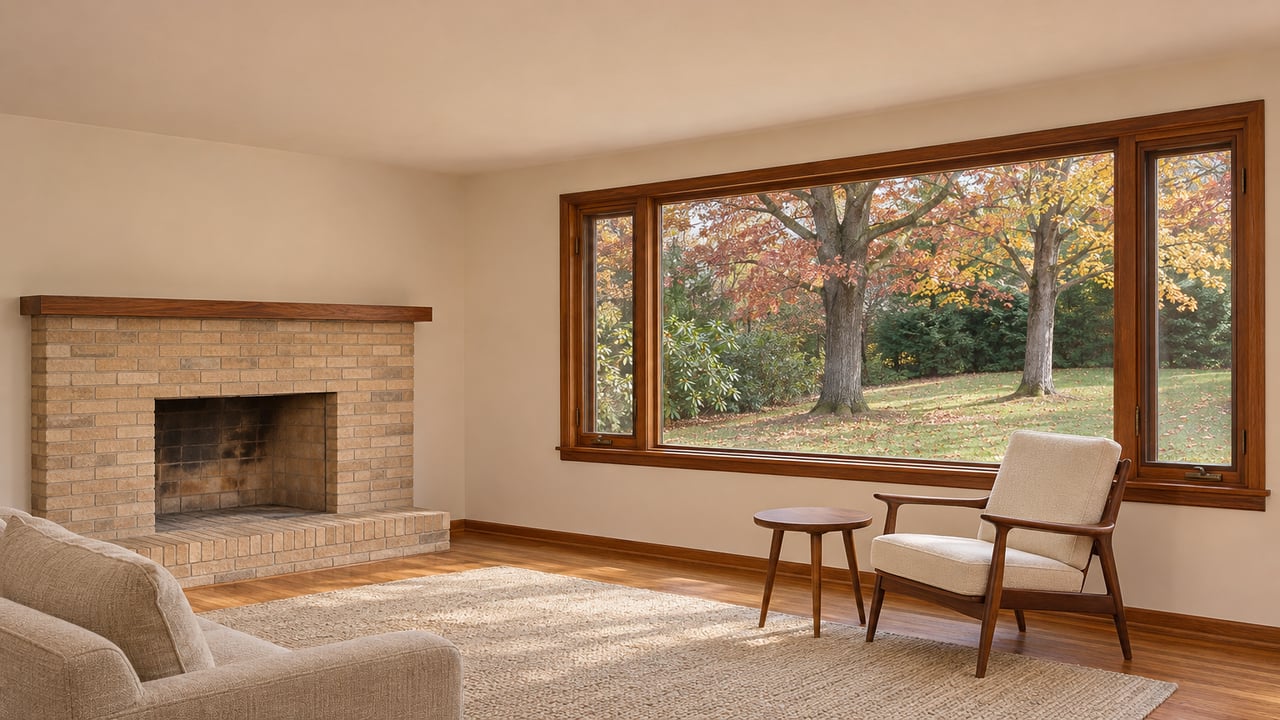
Around 1953, architect Robert W. Carr designed a low-slung brick ranch at 3311 Avon Road in Hope Valley. That house is gone. In 2012, Aiello Builders put up a modernist house on half of the original site. The architect was Phil Szostak, who had taught a graduate studio at the NCSU School of Design since 1976. The address and the neighborhood stayed the same, but the house on the lot is from a different era entirely.
Hope Valley is full of addresses like that one. The neighborhood turned 100 this year, and a century of building means a buyer touring southwest Durham's oldest country club neighborhood is really choosing among four different eras of houses. Each era comes with its own lot sizes, floor plans and maintenance history. Next year the golf course at the center of it all will be closed for restoration, and that adds a fifth variable for anyone looking at a house that faces the fairways.
Hope Valley started with Robert J. Mebane and Walter E. Sharpe. Their partnership dates to 1925, the country club was incorporated on February 18, 1926, and the first lots went on sale June 25, 1926. The clubhouse opened July 22, 1927. They planned a car-oriented suburb with curving streets around the golf course and marketed the lots to club members.
In the introduction to Preservation Durham's 2026 Hope Valley Centennial home tour, published on Open Durham, longtime resident Tad DeBerry writes, "Since 1926 each decade has put its stamp on Hope Valley." He credits the 1920s with "a magnificent Aymar Embury II Clubhouse, a beautiful residential park designed by Robert Cridland, and of course a show stopping Donald Ross golf course."
The National Register nomination for the Hope Valley Historic District centers on the club and the course. It names Chelsea Circle, Devon, Surrey, Dover and Windsor as the main streets and describes parcels ranging from about 0.4 acre to 4 or 5 acres. A tenfold difference in lot size within one district is the first sign that the neighborhood name covers a lot of ground.
Most of the earliest houses were designed by Durham architect George Watts Carr. The tour introduction also mentions three houses by Charles Barton Keene, who had an office in Winston-Salem and was working at Reynolda. The National Register nomination lists Tudor Revival, Colonial Revival and Norman Provincial houses from the 1920s and 1930s. Many were architect-designed, and most were period-revival in style.
You can see the style on this year's tour stops. The Sue and Horace Snow Jr. House at 3301 Devon Road is a rough-cast stucco house on an acre-sized lot at the corner of Devon and Dover, with wide views of the golf course. "Fair Oaks" at 3406 Dover Road is a 1928 Carr design in Tudor Revival style, with a steeply pitched hipped roof and applied half-timbering. The John and Hazel Wily House at 3426 Dover Road, built around 1938, is Norman Revival in brick with flared eaves and corner quoins.
Building continued slowly through the 1940s. Carr designed the Lenox Baker House on Cornwall Road, with an exterior modeled on The Linden in Natchez, Mississippi, and another house on Surrey Road in 1940. A buyer looking at a house from this era is buying something an architect drew for a specific client on a specific lot. These houses are now close to a century old, and the inspection, the renovation budget and the timeline all need to account for that.
The second era started with a sale. In the 1950s, Hope Valley, Incorporated, the Smith Richardson firm that had kept the development going through the Depression and the war, began selling large tracts of land. The National Register nomination says ranch houses with traditional or modernist detailing dominated the 1950s, along with a few fully modernist houses. Ranches stayed common in the 1960s. The 1970s brought more symmetrical Colonial Revival houses and some shed-roofed Contemporary designs.
Two houses on Devon Road show how different these can be from the Carr houses a few doors away. The nomination describes 3310 Devon Road, from around 1958, as a front-gabled, wood-sided house with overhanging eaves. Next door, 3312 Devon Road, from around 1959, is a U-shaped brick house built around a private courtyard.
The architects changed in this era as well. William Sprinkle designed 3409 Surrey Road in 1963, with multilevel interiors and a sunken living room. In 1962, Robert W. Carr, George Watts Carr's son, designed a one-story Neoclassical Revival house with a pedimented portico at 2818 Chelsea Circle for Eddie and Mary Cameron. The tour program calls it Maryvale and says it was modeled on the work of Thomas Jefferson. On Somerset Drive, the Charlie and Josie Humphries House was designed and built by Sholtz, a mid-century design-build firm that had a components factory in Durham. The tour notes that Hope Valley has several Sholtz houses.
The tour introduction says Hope Valley's population doubled during the 1960s and 1970s, when it became "the suburb we know today." A ranch or split-level from these decades has had 50 or 60 years of owners, and its condition depends on how each of them updated it. Two mid-century houses on the same street can be decades apart in their kitchens, mechanical systems and windows.
By the 1980s, new construction had filled in most of the neighborhood. The tour introduction describes the limited infill that followed and names designers Hutch Johnson and Rodney Ward as prominent then and still active in Hope Valley today. The National Register nomination adds that new houses from the 1990s and early 2000s often copied historic styles.
That makes a house's style an unreliable guide to its age. The brick Neoclassical house at 3608 Dover Road is a Williamsburg-style design built in 1981. The two-story Neo-Craftsman house at 3130 Cornwall Road, with brick and fiber-cement siding, was built in 1998. Hutch Johnson designed a one-and-a-half-story Neotraditional house at 3737 Hope Valley Road in the mid-1990s. The Contemporary house at 3127 Surrey Road dates to 1989, and Johnson redesigned it in 2008 and 2009. At 3311 Avon Road, the 2012 modernist house replaced a 1950s ranch, so that one address spans two eras.
For a buyer, this era is a different purchase from the first two. A 1998 house that looks like a 1930s one is still a 1998 house. A 1950s ranch that has been heavily reworked may look new while some of its original systems remain. Pin down the year built, and the year of any major renovation, before you compare price per square foot between two houses that look alike from the street.
The golf course is changing on its own schedule. According to Triangle Golf's October 14, 2026 report, Greensboro-based architect Kris Spence, known for restoring Donald Ross designs, will start an extensive restoration of the Hope Valley Country Club course in January, with reopening expected in mid-to-late fall 2027. The club plans fireworks at its New Year's Eve party, with groundbreaking following on New Year's Day.
The plan covers the whole course. The greens, which have risen above the fairways over the years, will be rebuilt to their original height with TifEagle Bermuda, using Ross's original drawings as the guide. The bunker count will go from 55 to 59. The fairways will be sodded in Zeon Zoysia, and there is significant irrigation and drainage work. On No. 11, a creek that was filled in will be restored. Triangle Golf notes that Ben Hogan called it one of the greatest holes in the world and later said that filling in the creek "ruined" it. Spence renovated the practice area last year and has already removed many trees. The last changes to the course were made in 2003 by Brian Silva.
For a house on the course, this changes what a buyer will see. Anyone touring a course-side lot in 2027 will be looking at a project under construction, and anyone who toured before the tree removal may find the views different now. The finished restoration is a plan with a target date. Visit a course-side house more than once, and look at the view from the rooms you will actually use.
Bobby Jones Links, the club's management company, named Aaron James general manager on May 20, 2026. James told Triangle Golf that "the club is booming." The club's membership page lists Full/Golf, Racquet, Social, Non-Resident and provisional graduate student memberships. Social membership includes the pools, clubhouse, dining and social events, with limited golf and racquet access. None of these categories is tied to owning a house in Hope Valley. Budget for the house and the club as two separate decisions, and ask the club directly about current terms.
The most recent Durham Regional Association of REALTORS market data covers the broader Durham area, not Hope Valley alone, but it describes the market a Hope Valley buyer is shopping in. In September 2026, the median sale price was $420,000, down 6.7% from September 2025. Closed sales rose 3.0% to 339. Median days on market rose 37.9% to 40, and supply reached 4.2 months, up 13.4% from a year earlier.
The days-on-market number matters most for this neighborhood. When homes in the Durham area were taking about 40 days to sell in September, a buyer usually had time to look up a house's build year, check its renovation history and visit a course-side lot more than once before making an offer. Our recent post on what a due diligence fee buys in Durham's 2026 market explains how to size that window. For the neighborhood itself, our Hope Valley guide covers the area around the club, and the Durham overview places it within the city.
If you're comparing a 1928 Carr house on Dover Road with a 1990s house in a historic style a few streets away, or deciding whether a course-side lot makes sense before the course reopens in fall 2027, Pat Dillon Real Estate can walk Hope Valley with you street by street. Schedule a free 30-minute consultation, and we'll start with the year each house on your list was built.
Schedule your free 30 minute consultation with Pat to learn more about the buying and selling process and how to get started!
PAT DILLON REAL ESTATE
(919) 368-4068
[email protected]
704 Slash Pine Dr
Cary NC 27519
308 W Main St Ste A
Durham NC 27701
Hours
8 AM - 6 PM